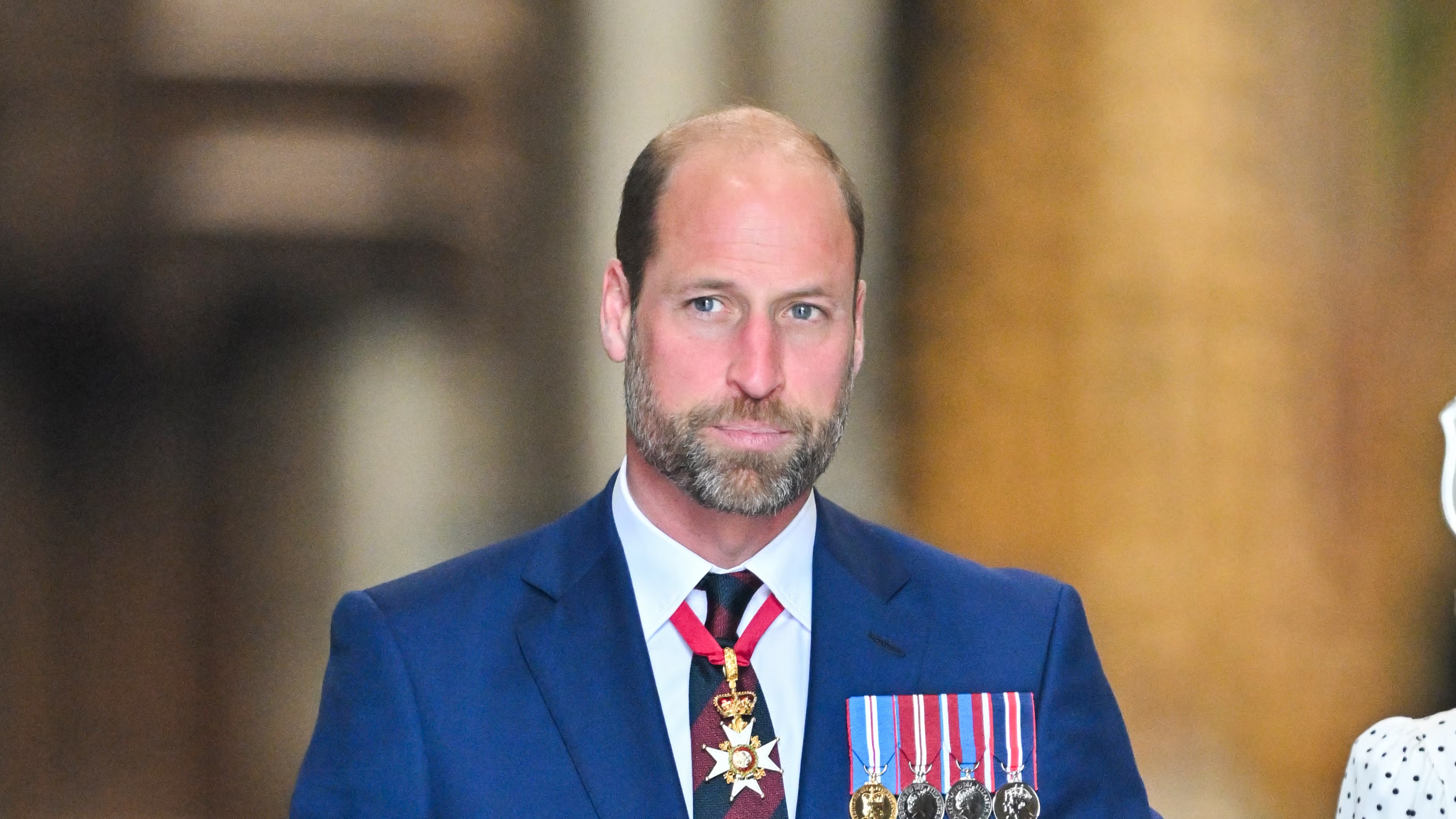
Prince William is one of the most prominent members of the British royal family and a central figure in the future of the monarchy. As Prince of Wales and heir to the throne, he represents continuity, duty, and a modern approach to royal public service.
Born on June 21, 1982, in London, England, Prince William Arthur Philip Louis is the elder son of King Charles III and Diana, Princess of Wales. From an early age, he lived under global public attention, yet his upbringing also emphasized compassion, responsibility, and awareness of social issues.
William was educated at Eton College before studying geography at the University of St Andrews in Scotland. During his university years, he met Catherine Middleton, who would later become his wife. Their marriage in 2011 was watched by millions around the world and became a defining moment for a new generation of the royal family.
Before fully focusing on royal duties, Prince William served in the armed forces and trained as a helicopter pilot. He later worked as an air ambulance pilot, a role that reflected his desire for practical public service beyond ceremonial responsibilities.
Over the years, William has become increasingly active in charitable and national initiatives. He has focused particularly on mental health awareness, environmental sustainability, homelessness, and support for young people. His Earthshot Prize initiative has gained international recognition for encouraging innovative solutions to environmental challenges.
As Prince of Wales, he carries major constitutional and symbolic importance. He regularly represents the Crown in the United Kingdom and abroad, supporting diplomacy, community projects, and national institutions.
William is often seen as a bridge between royal tradition and contemporary expectations. His communication style, family image, and focus on practical causes have helped modernize perceptions of the monarchy among many people.
Prince William’s future role as king places him at the center of the monarchy’s next chapter. With decades of public experience and a strong commitment to service, he remains one of the most important royal figures of his generation.